Get a Callback
We'll find it for you 💌
Obsessed with this piece? A Mia store expert will call you to help find it nearby.
You're all set!
A Mia store expert will call you shortly to help you find this piece at your nearest store.
Expect a call within 24 hoursDiscover similar or identical jewellery by uploading a picture.
Discover similar or identical jewellery by uploading a picture.
})
The file size should not exceed 5 MB
File size exceeds the limit

























 Blogs & Articles
- Home
- Blogs & Articles
- Lab Diamonds vs Real Diamonds Cost Comparison
10 Feb 2026

by Mia
10 Feb 2026
Read:
4 Mins
Spread the Fashion Love!


Be the first to see
Explore Mia’s latest jewellery collection, crafted to feel precious, every day!
The catalogue has been sent to you via email!
Be the first to see
Explore Mia’s latest jewellery collection, crafted to feel precious, every day!
The catalogue has been sent to you via email!
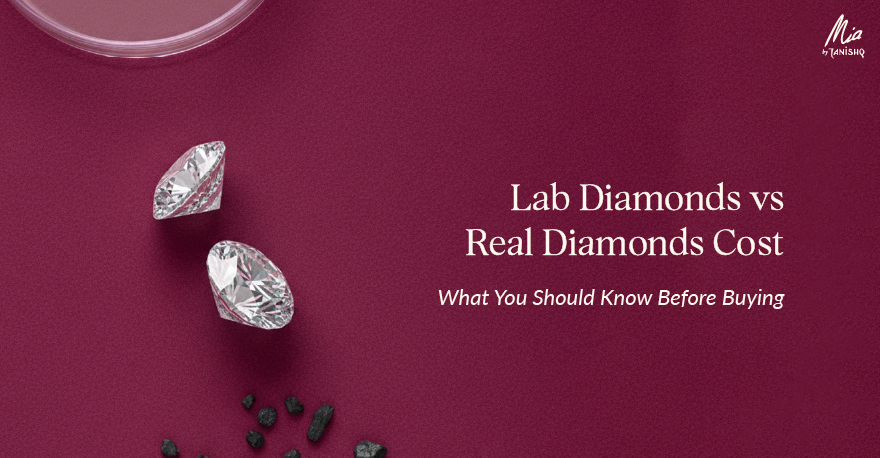

Lab Diamonds vs Real Diamonds Cost: What You Should Know Before vvBuying
If you’ve ever found yourself comparing two diamonds that look almost identical, same sparkle, same size, same clarity, but with noticeably different prices, you’re not alone. One of the most searched questions today is about the cost of lab-grown diamonds vs real diamonds which is also known as natural diamond, and it usually comes from a very practical place: “What am I really paying for?”
At Mia by Tanishq, conversations around jewellery often begin with everyday wearability and honest choices. Diamonds, whether lab-grown or natural, have no difference in features. Understanding where the price difference comes from makes the decision feel less confusing and far more personal.
What Really Shapes the Price of a Diamond
When people talk about how a diamond is priced, they often refer to the 4Cs, but not everyone knows what that actually means. The 4Cs are simply four characteristics jewellers use to understand a diamond’s quality and value: cut, colour, clarity, and carat.
When people talk about how a diamond is priced, they often refer to the 4Cs, but not everyone knows what that actually means. The 4Cs are simply four characteristics jewellers use to understand a diamond’s quality and value: cut, colour, clarity, and carat.
Colour refers to how colourless a diamond appears. The closer it is to clear, the rarer and more valuable it tends to be.
Clarity looks at natural inclusions such as tiny marks formed during a diamond’s creation. Fewer inclusions usually mean a higher price.
Carat, often mistaken for size alone, is actually a measure of weight. As carat weight increases, prices rise more steeply because larger diamonds are harder to come by.
What’s important to know is that these four factors apply equally to both lab-grown and natural diamonds. A well-cut diamond with good clarity, pleasing colour, and higher carat weight will always sit at a higher price point, no matter where it comes from. The grading system doesn’t change with origin; the standards remain the same.
Where the story changes is how the diamond comes into existence.
Natural diamonds are formed deep within the earth over billions of years. Their supply is finite, unpredictable, and shaped by nature. Lab-grown diamonds, on the other hand, are created in controlled environments using advanced technology that replicates natural conditions. Chemically and visually, the two are identical, but their journeys couldn’t be more different. This difference in origin plays a significant role in the conversation about lab diamonds vs. real diamonds.
Why Do Natural Diamonds Cost More
When you’re looking at the price of synthetic diamonds vs real diamonds, natural stones tend to sit higher, and with good reason.
Natural diamonds involve extensive mining processes, global supply chains, sorting, and cutting. Not every mined diamond is suitable for jewellery; many are discarded due to imperfections. Adding to that is the rarity factor. Nature decides how many diamonds exist, and you begin to understand the premium.
The emotional layer is a major layer. For many buyers, natural diamonds are associated with legacy, milestones, and pieces meant to be passed down. That perception of permanence and history still holds value in the market today.
Our category manager often explains it simply:
“With natural diamonds, part of what you’re paying for is time - time that no technology can recreate.”
Why Lab-Grown Diamonds Are More Accessible
Now, let’s talk about why lab-grown diamonds are cheaper. This is a commonly asked question. Lab-grown diamonds are produced in weeks rather than billions of years. Because the environment is controlled, yields are higher, and waste is lower. This efficiency significantly impacts pricing. In most cases, when comparing lab-grown diamonds vs real diamonds cost, lab-grown options can be 30-60% cheaper for similar specifications.
Many buyers choose lab-grown diamonds because it allows room to prioritise size, clarity, or design while staying within a comfortable budget. For jewellery meant to be worn every day, like rings, pendants, delicate earrings, the choice feels practical and modern, very much aligned with the idea of precious. every day.
Same Look, Different Price: What You’re Really Choosing
When comparing synthetic diamond price vs real, it’s helpful to think beyond cost alone. If you place a lab-grown and a natural diamond side by side, even experts need specialised equipment to tell them apart. Visually, they offer the same brilliance. Structurally, they are just as durable.
The difference lies in value perception. Natural diamonds hold stronger resale and long-term market value. Lab-grown diamonds, meanwhile, deliver exceptional visual value upfront but negative or no resale value. One of our designers explains it simply:
“Lab-grown diamonds are about maximising the present moment. Natural diamonds are about preserving a story over time.”
Neither is right nor wrong; it’s just the intention that matters.
The Role of Metal in the Cost Conversation
While diamonds often take centre stage, the metal you choose also shapes overall pricing. At Mia by Tanishq, jewellery is thoughtfully crafted in 9 KT, 14 KT, and 18 KT gold, each offering a different balance of durability, lightness, and value.
Pairing lab-grown diamonds with lighter karat gold makes everyday jewellery more approachable, without compromising on design or finish. It’s a subtle reminder that price is never about one element alone; it’s about how everything comes together.
So, Which One Is Right for You?
If you’re comparing lab diamonds vs real diamonds cost, you’re already making an informed choice. Lab-grown diamonds suit buyers who value flexibility, modern design, and everyday wear. Natural diamonds resonate with those drawn to rarity, tradition, and long-term symbolism.
Both belong in contemporary jewellery conversations. Both deserve space in your jewellery box. What matters most is that your choice feels comfortable, intentional, and reflective of you, whether it’s a piece you wear daily or the kind of wedding gifts they’ll treasure forever.
Diamonds More Than a Price Tag
Diamonds today aren’t about following a single rulebook. They’re about choice, clarity, and confidence. When you understand what shapes the cost, the decision shifts from comparison to connection. Some diamonds are chosen to be worn and lived in every day, while others carry stories meant to last longer. Neither is more right than the other. What truly matters is how naturally the diamond fits into your life, because that’s where jewellery really begins.
Frequently Asked Questions
1. Are lab-grown diamonds cheaper than natural diamonds?
Yes. In most cases, lab-grown diamonds cost significantly less than natural diamonds of similar quality due to controlled production and higher yield.
2. Do lab-grown diamonds look different from real diamonds?
No. Lab-grown and natural diamonds are visually and chemically identical. The difference lies in origin, not appearance.
3. Is the resale value lower for lab-grown diamonds?
Generally, yes. Natural diamonds tend to retain resale value better due to market perception and rarity.
4. Are synthetic diamonds durable for daily wear?
Absolutely. Lab-grown diamonds have the same hardness and durability as natural diamonds, making them suitable for everyday jewellery.
5. Which is better for engagement rings - lab or natural diamonds?
It depends on personal preference. Lab diamonds allow more flexibility in size and design, while natural diamonds are often chosen for their symbolic and heirloom value.
Stories you might also like




×