Get a Callback
We'll find it for you 💌
Obsessed with this piece? A Mia store expert will call you to help find it nearby.
You're all set!
A Mia store expert will call you shortly to help you find this piece at your nearest store.
Expect a call within 24 hoursDiscover similar or identical jewellery by uploading a picture.
Discover similar or identical jewellery by uploading a picture.
})
The file size should not exceed 5 MB
File size exceeds the limit
















 Blogs & Articles
- Home
- Blogs & Articles
- Understand the Diamond Clarity & Colour to Choose Your Sparkle
4 Feb 2026

by Mia
4 Feb 2026
Read:
4 Mins
Spread the Fashion Love!


Be the first to see
Explore Mia’s latest jewellery collection, crafted to feel precious, every day!
The catalogue has been sent to you via email!
Be the first to see
Explore Mia’s latest jewellery collection, crafted to feel precious, every day!
The catalogue has been sent to you via email!
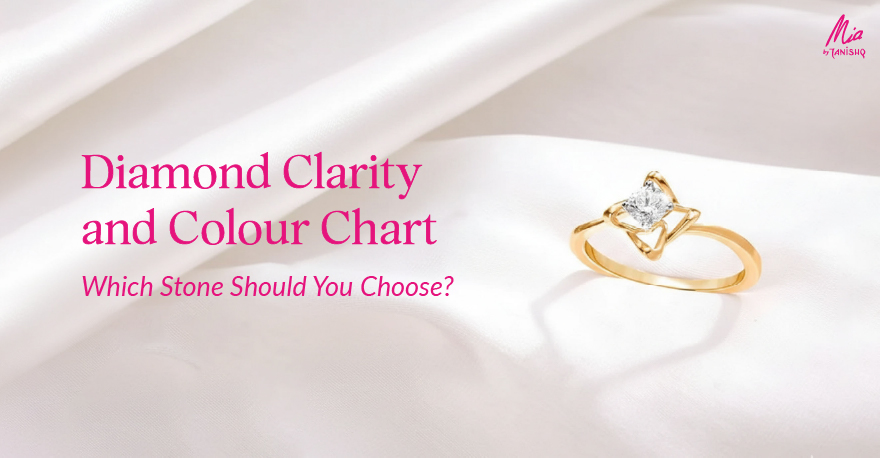

Diamond Clarity and Colour Chart: Which Stone Should You Choose?
When it comes to purchasing diamond jewellery, having an understanding of the 4Cs (Carat, Colour, Clarity & Cut) is important. As per the factors, you can find the perfect stone which dazzles like a dream while fitting your budget.
Among the 4 influencing factors, clarity and colour play significant roles in determining the diamond's overall appearance and value.
In this blog, we shall provide an easy-to-comprehend diamond clarity and colour chart. It will positively empower you to make informed decisions regarding which is the shining stone for your special life moments!
Decoding the Clarity Scale: How Clean is Your Diamond?
No matter where you are in the world or what language you speak, diamond shopping today comes with a shared vocabulary. Terms like VVS1 or SI2 pop up everywhere and they all point to one thing: clarity.
Diamond clarity is essentially about how clean a stone looks; how free it is from marks, inclusions or surface imperfections. These tiny characteristics are not flaws added later. They are natural signatures formed when a diamond takes shape under intense heat and pressure.
Flawless : At the very top of the diamond clarity scale is Flawless. These diamonds show no inclusions or blemishes at all. They are incredibly rare.
VVS1 & VVS2 : Any inclusions present are so microscopic that even trained gemologists struggle to spot them under magnification. They are perfect for buyers who want near-perfection.
VS1 & VS2 : These diamonds have small characteristics that can be seen under magnification, but only with careful inspection.
SI1 & SI2 : Here, inclusions are easier to spot under magnification and, in some cases, may be visible to the naked eye. However, these diamonds can still deliver impressive visual appeal while being far more budget-friendly.
I1, I2 & I3 : While they do not rank high in clarity, these grades appeal to buyers who value a larger carat size or bold presence over pristine clarity.
Decoding the Diamond Colour Scale: What Each Shade Tells You
Most gem-quality diamonds used in jewellery are not pure white by default. They exist on a natural colour journey, starting from crystal-clear brilliance and moving into soft yellow or brown tones.
What truly sets a diamond apart is how close it stays to that colourless extreme. Diamonds graded D, E and F sit at the very top, prized for their rare, icy-white glow that feels effortlessly luxurious in style.
To ensure consistency and accuracy worldwide, the D-to-Z Colour Scale was established as an internationally recognised system for grading diamond colour. This scale does more than identify visible colour; it captures the subtle tonal differences within each shade that directly influence a diamond’s beauty and quality.
Here’s how the diamond colour scale is structured:
D–F : This is the top tier of the colour scale. Diamonds that look pure, icy and untouched by any tint.
G–J : These sit in the near-colourless zone, where any warmth is so subtle most people won’t notice it at all. They are considered a smart sweet spot since they are visually stunning, yet more value-friendly.
K–M : Here, a gentle warmth becomes visible, giving the diamond a softer, more expressive vibe. Many love this range for the personality it brings.
N–Z : These diamonds show noticeable yellow or brown tones, making them more accessible in price. They are perfect for bold, creative jewellery where colour adds character rather than takes away from it.
Diamond Chart Clarity and Colour: Which Ones to Choose?
This diamond colour scale and clarity chart shall rate the gems on the basis of colour and clarity combinations.
It begins with D (i.e. colourless, most preferred) and matches them with different grades of clarity. Compare colours across various clarity levels below. Note that this guideline represents the opinions assuming equal diamond cut grades.
D/E/F Colour Diamonds
G Colour Diamonds
H/I Colour Diamonds
| Clarity Level | Recommendation | Rating & Opinion |
|---|---|---|
| D-Flawless | Investment | Elite-Level Investment Grade; highly expensive and rarely used in the making of jewellery |
| E-Flawless | ||
| F-Flawless | ||
| D-VVS-1 | Investment | Extreme-Level Investment Grade; seldom chosen for use in jewellery designs |
| E-VVS-1 | ||
| F-VVS-1 | ||
| D-VVS-2 | Investment | Extreme-Level Investment Grade; best colour visibility; flaws are detectable only when placed under a microscope |
| E-VVS-2 | ||
| F-VVS-2 | ||
| D-VS-1 | Great Choice | Best Colour/Excellent Clarity |
| E-VS-1 | ||
| F-VS-1 | ||
| D-VS-2 | Great Choice | Best Colour/Great Clarity; top grade which can be seen with the naked eye |
| E-VS-2 | ||
| F-VS-2 | ||
| D-SI-1 | Very Nice | Best Colour/Good Enough Clarity; completely colourless and flaws are rarely detectable upon usual wear |
| E-SI-1 | ||
| F-SI-1 | ||
| D-SI-2 | Acceptable | Best Colour/Mid Clarity; if you prefer colours and are open to slightly detectable flaws, this can be a fitting pick for you |
| E-SI-2 | ||
| F-SI-2 | ||
| D-I-1 | Affordable | Best Colour/Good Clarity; may have perfect colour, flaws are rarely detectable; this is the best option if you're looking for timeless shine on a budget |
| E-I-1 | ||
| F-I-1 | ||
| D-I-2 & Below | Affordable | Best Colour/Good Clarity; has perfect colour, flaws may be slightly detectable only upon very close inspection; great choice for individuals looking for accessible & fashion-forward shine |
| E-I-2 & Below | ||
| F-I-2 & Below |
| Clarity Level | Recommendation | Rating & Opinion |
|---|---|---|
| G-Flawless | Great | Very Good Colour/Extreme Clarity; striking colour but flaws are hardly visible under a 10X microscope |
| G-VVS-1 | Great | Very Good Colour/Extreme Clarity; vivid colour with imperfections noticeable when examined under a 10x microscope |
| G-VVS-2 | Very Nice | Very Good Colour/Extreme Clarity; striking colour & clarity |
| G-VS-1 | Fine | Very Good Colour/Excellent Clarity; minimal flaws are detectable under 10X microscope |
| G-VS-2 | Good | Very Good Colour/Very Good Clarity; mesmerising colour and clarity; the stone shall be flawless to the naked eye |
| G-SI-1 | Nice | Very Good Colour/Plausible Clarity; colour is stunning and flaws are not likely to be detectable upon wear |
| G-SI-2 | Acceptable | Very Good Colour/Mid Clarity; if you want a beautiful gem and are open to slightly detectable flaws, this can be a fitting pick for you |
| G-I-1 | Affordable | Very Good Colour/Compromised Clarity, may have perfect colour but flaws are very much detectable; you may have to sacrifice some colour for clarity |
| G-I-2 & Below | Affordable | Very Good Colour/Compromised Clarity; may have perfect colour but the flaws are very obviously detectable |
| Clarity Level | Recommendation | Rating & Opinion |
|---|---|---|
| H-Flawless | Acceptable | Good Enough Colour/Extreme Clarity, beautiful colour; flaws may only be visible under a 10x microscope; you may have to consider sacrificing clarity for size/more colour |
| I-Flawless | ||
| H-VVS-1 | Acceptable | Good Enough Colour/Extreme Clarity; feature rich colour |
| I-VVS-1 | ||
| H-VVS-2 | Acceptable | Good Enough Colour/Extreme Clarity; inclusions typically detectable only under close inspection using a 10x microscope |
| I-VVS-2 | ||
| H-VS-1 | Very Good | Good Enough Colour/Great Clarity; comes with striking colour |
| I-VS-1 | ||
| H-VS-2 | Practical | Good Enough Colour/Very Good Clarity; alluring colour as well as clarity; the stone shall be flawless to the naked eye |
| I-VS-2 | ||
| H-SI-1 | Practical | Good Enough Colour/Good Enough Clarity, pleasant colour and flaws are not likely to be detectable upon wear |
| I-SI-1 | ||
| H-SI-2 | Acceptable | Good Enough Colour/Mid Clarity; if you have a preference for size and can accept slightly detectable flaws, this can be a fitting pick for you |
| I-SI-2 | ||
| H-I-1 | Affordable | Good Enough Colour/Acceptable & Often Good Clarity; choose a smaller size for improved clarity; perfect choice if you're looking for sparkling jewellery on a budget |
| I-I-1 | ||
| H-I-2 & Below | Affordable | Good Colour Colour/Acceptable & Often Good Clarity; the gem shall have great colour; opt for a smaller stone for better clarity |
| I-I-2 & Below |
Final Word
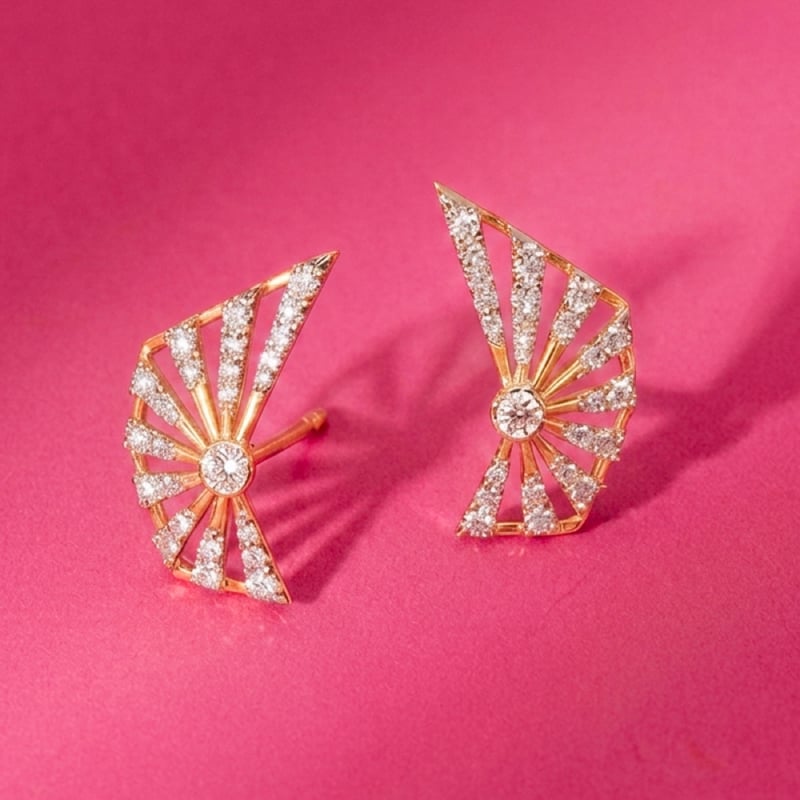
If you're investing in your wish-listed pair of diamond earrings, you surely want their shine to last a lifetime. Clean your diamond earrings at home by simply soaking them in warm water with a few drops of mild, unscented dish soap.
In 20-30 minutes, you can take them out and gently scrub with a soft-bristle toothbrush. Rinse thoroughly under running water. However, be sure to plug the drain! Dry the pieces with a lint-free cloth for an everlasting streak-free shine.
Now that you know how to clean diamond earrings at home, you can worry-free check out with your picks. Check out modern diamond earrings designs with us, at Mia by Tanishq. Stock up on your favourite designs in 2026 and keep their shine alive forever!
Frequently Asked Questions
1. Can I apply my perfume after putting on my jewellery?
We recommend spraying your perfume first and, at the end, adorning your diamond jewellery. It is best to avoid directly spraying perfume on your jewellery.
2. Can I store all my diamond jewellery pieces in one container?
No, you must store your diamond jewellery pieces in different boxes or pouches. It’s best to opt for soft cloth pouches/fabric-lined boxes.
3. How to clean diamond stud earrings at home?
As stud earrings are usually more compact, put them in a small cup of warm water and an unscented soap solution. Use a soft-bristled brush to clean the crevices. Use a gentle cloth to wipe them.
Stories you might also like



×