Get a Callback
We'll find it for you 💌
Obsessed with this piece? A Mia store expert will call you to help find it nearby.
You're all set!
A Mia store expert will call you shortly to help you find this piece at your nearest store.
Expect a call within 24 hoursDiscover similar or identical jewellery by uploading a picture.
Discover similar or identical jewellery by uploading a picture.
})
The file size should not exceed 5 MB
File size exceeds the limit























 Blogs & Articles
- Home
- Blogs & Articles
- How-Opals-Entered-Indian-Jewellery-Trends
31 Mar 2026

by Mia
31 Mar 2026
Read:
4 Mins
Spread the Fashion Love!


Be the first to see
Explore Mia’s latest jewellery collection, crafted to feel precious, every day!
The catalogue has been sent to you via email!
Be the first to see
Explore Mia’s latest jewellery collection, crafted to feel precious, every day!
The catalogue has been sent to you via email!
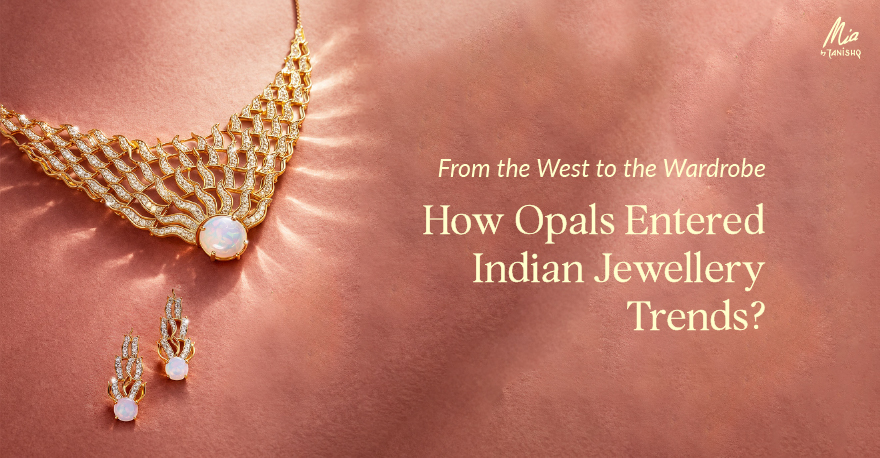

From the West to the Wardrobe: How Opals Entered Indian Jewellery Trends?
Greeks viewed opals as 'tears' that God cried in the name of joy. This itself ties in with the aesthetic whimsy defining the 2026 summer mood.
Opals are natural gemstones known for upholding a rare visual, a ‘play of hues’. When you move the gem, you can see flashes of various colours like red, yellow, blue and green. This summer, opal numbers are taking over Indian jewellery trends with their fanciful appeal.
Coming from regions in the West, particularly from Australia and Ethiopia, these gems have resonated with the modern yearning for a shine that feels natural.
Read ahead to uncover the magic cast by opals on the Indian jewellery ethos of 2026!
Why is Opal Jewellery the ‘Talk of the Town’ in 2026?
Opals entered the Indian jewellery scene through a combination of reasons. The modern importation of high-quality stones, ancient trade routes, and evolving zodiac and fashion trends are major contributors.
Opals were historically featured across extravagant jewellery collections of Indian maharajas during the late 19th - early 20th centuries. They were typically sourced during their European trips. These iridescent gems were used in Art Deco designs, signifying a modern taste.
Presently, the gem has become all the more popular in India owing to its unopposed appeal in terms of colour-play and general affordability.
Especially in the context of summer, opals stand out as captivating elemental additions to everyday outfits. These are gemstones that don't simply reflect light; they hold the light of the Sun within them. Serving as the centre of life and light source, the opal poses as the ‘rejuvenating middle’ where everything converges.
 Here’s what has made opals a popular feature across trends in Indian jewellery through 2026:
1. Anciently Traceable Connections & Etymology
The term 'opal' is derived from the ancient Sanskrit word úpala, which translates to 'precious stone'. With roots in this classical Indian language, an innate soul connection is felt with the gems.
Furthermore, ancient Roman texts suggest how opals were sourced via trade routes based in India as far back as 250 BC. Even though these stones originated from other regions and only passed through Indian traders, the connection holds significance.
2. Astrological Importance
The astrological importance of opals in India continues to make itself known. It’s referred to as a powerful gemstone that is associated with Venus (Shukra). Opals enhance creativity, bring immense luck, and strengthen the weakened Venus in one's birth chart.
So, opals are worn as ways to manifest heightened energy, creativity, and productivity. Beyond aesthetics, opals make the desi fashionistas' stars align in her favour!
3. Affordability and Versatility with Styling
Opals are relatively affordable in comparison to other gemstones. Thus, being accessible and budget-friendly, the gems have found a place in both fine, high-end, and fashion jewellery.
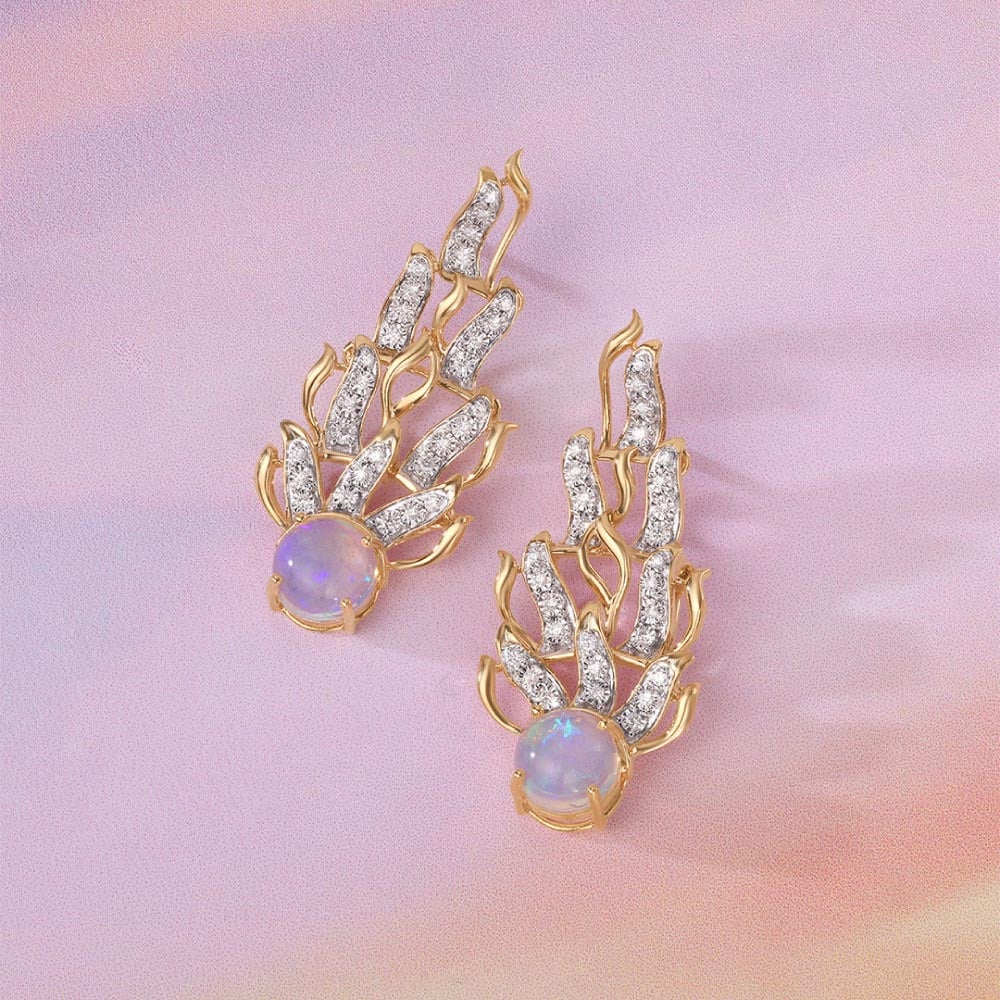
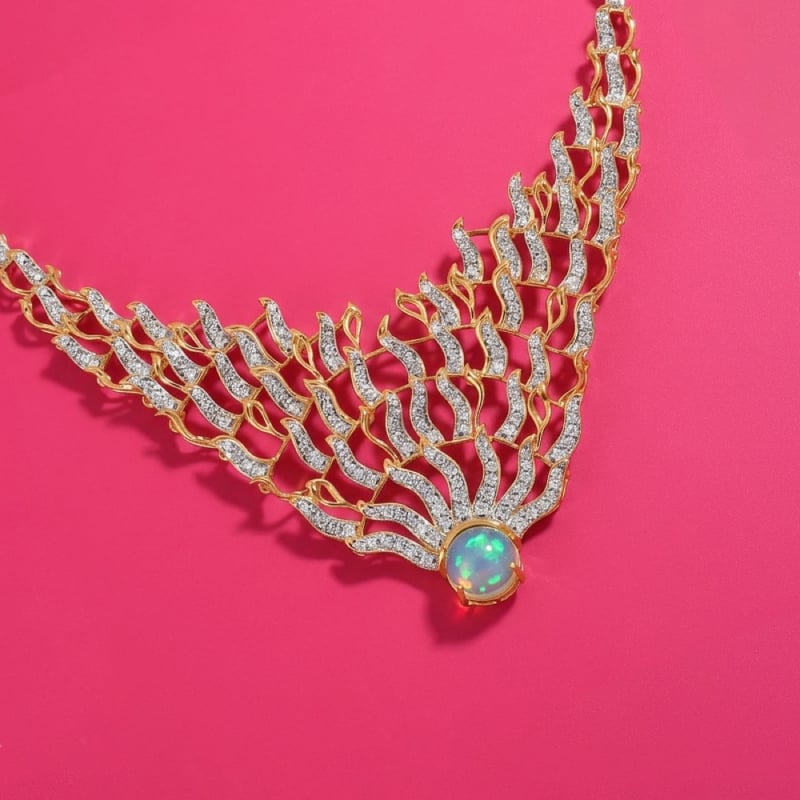
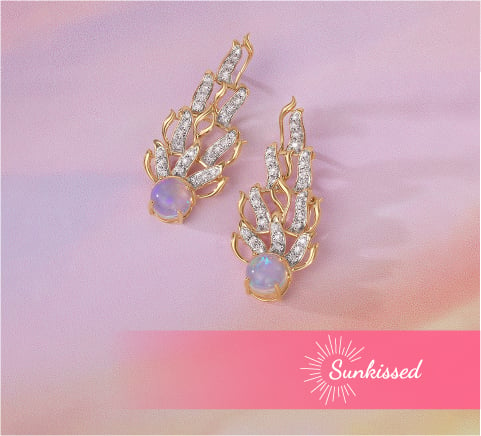
They're being incorporated into statement necklace designs, drop earrings, and pendant styles. Opals and diamonds have formed a sparkling alliance, infiltrating the summer vanity of Gen-Z fashionistas. So, help yourself to the striking sparkle of diamonds and the mystical translucence of opals this summertime!
Tracing the Timeline & Reputation: How Has the Opal’s Image Evolved Through History?
As jewellery innovations, opals have been positioned as one of the top 2026 trends. Offering that 'soft' iridescence, this versatile gemstone lends a more grounding feel compared to traditionally popular stones. Opals are appealing to consumers who prioritise jewellery that feels personal, soulful and forward.
Here’s an overview of how the image of the opal has changed over time:
1. The Old World
In this era, Hungary mined the opals for Europe and the Middle East. On the other hand, Peru, Mexico, and Honduras had to supply the gems to their own empires. The New World opals were introduced to the Conquistadors in Spain when they returned with the gems (early 16th century).
Reputation: Romans considered an opal to be the most precious gemstone, alongside emeralds. It was viewed as a true symbol of hope, purity, and positive fortune. It was also believed to possess the virtues of all other gems in existence.
2. Late 1800’s
Australia dominated opal production, producing over 90% of the world's output. Opals differed in quality across various countries, like Mexico, the USA, Ethiopia, Zambia, Guatemala, Peru, Canada, Poland, New Zealand, Indonesia, and Brazil.
Reputation: Greeks went on to believe that opals bestowed the gift of foresight and prophecy, holding the power to protect the owner from diseases. Arabic legends suggested that opals fell from heaven, splattered across via flashes of lightning.
3. Early 1900’s
Opal mining began at Lightning Ridge, Australia, with the very first shaft put down around 1901-1902. In a few months’ time, a Bathurst minor called Charlie Nettleton commenced shaft sinking. He sold the first gems’ parcel from the field for 30 dollars, which was not even a 5th of the price that could be charged in 5 years
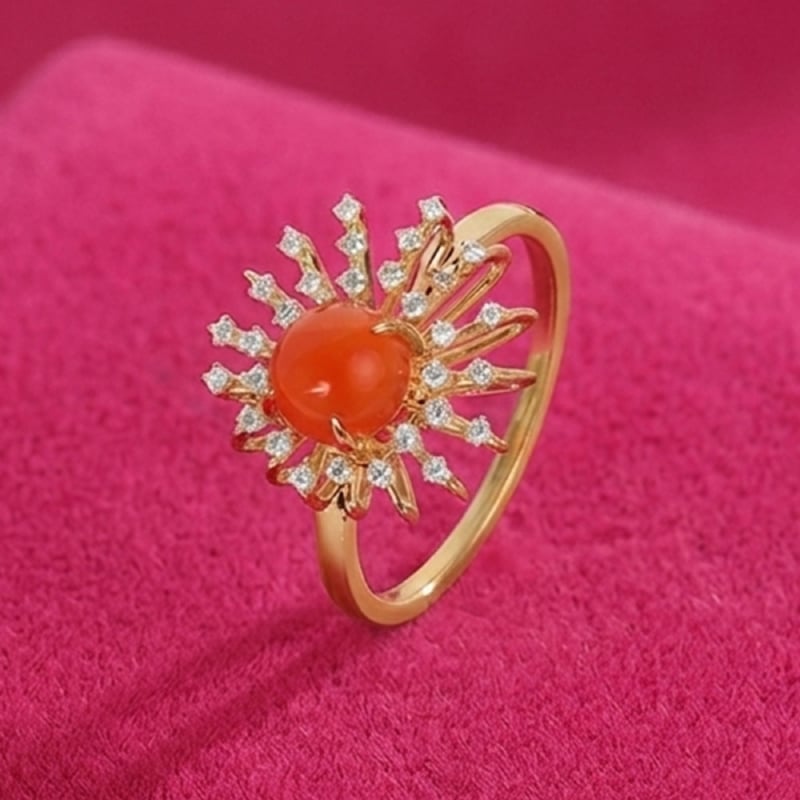
In Ethiopia, the first-ever officially documented discovery of gem-quality opal occurred in 1994 within the Shewa Province (near Mezezo). These early stones displayed warm colourways like reddish-brown, orange and deep chocolate tones, giving them a distinct visual identity. The initial opals were unearthed by local farmers based on the Yita Ridge.
Reputation: At this point, the rising stars among gemstones took a hit. There was a significant transformation in their reputation, resulting from a misunderstanding about the supposed ‘unlucky’ stone. Every champion has haters; this was just a bump along the road to fame undertaken by the opals.
4. Close to the 2000’s
Close to the year 2000, the overall estimated value of opal production stood at around 44 million dollars. A major global market presence of Ethiopian opals was traced by the late 2000s, with the industry completely transformed by 2008. That year, the discovery of high-quality, stable opals within the Welo (Wollo) province truly changed the game for Ethiopian opals.
Reputation: There was a redirection or shift fuelled by the brilliance of opals and the patronage of royalty. The population was steadily overcoming superstition. Queen Victoria rehabilitated the opal's image by wearing them frequently. She also gifted them to her daughters, cementing their superiority in high society.
5. The Current Decade
In 2026, opals are undergoing a major resurgence that is being driven by a desire for unique, ethical, and ‘meaningful’ jewellery. These high-quality, authentic stones are moving consumers in a way that feels genuine, straying away from mass-produced items.
The one-of-a-kind nature of each opal's colour play or ‘fire’ has made them the ultimate artistic choice in the context of contemporary jewellery.
The Art Nouveau and Art Deco palettes now taking over the latest Indian jewellery trends continue to embrace opals for their other-worldly and kaleidoscopic qualities.
Discover the magic for yourself and explore our exclusive opal jewellery collection at Mia by Tanishq. Let every piece tell your story this summer!
Final Word
Opals in India have forever been associated with creativity, imagination, and emotional balance. These October birthstones are believed to manifest good fortune, prosperity, and love. It's now a popular choice for summer jewellery with its colour and light play at the forefront, appearing as striking as ever.
Here, at Mia, discover a stunning summer special collection of opal jewellery to find your whimsical muses for 2026! Tap into this resounding Indian jewellery trend just in time for summer and make it your own.
Here’s what has made opals a popular feature across trends in Indian jewellery through 2026:
1. Anciently Traceable Connections & Etymology
The term 'opal' is derived from the ancient Sanskrit word úpala, which translates to 'precious stone'. With roots in this classical Indian language, an innate soul connection is felt with the gems.
Furthermore, ancient Roman texts suggest how opals were sourced via trade routes based in India as far back as 250 BC. Even though these stones originated from other regions and only passed through Indian traders, the connection holds significance.
2. Astrological Importance
The astrological importance of opals in India continues to make itself known. It’s referred to as a powerful gemstone that is associated with Venus (Shukra). Opals enhance creativity, bring immense luck, and strengthen the weakened Venus in one's birth chart.
So, opals are worn as ways to manifest heightened energy, creativity, and productivity. Beyond aesthetics, opals make the desi fashionistas' stars align in her favour!
3. Affordability and Versatility with Styling
Opals are relatively affordable in comparison to other gemstones. Thus, being accessible and budget-friendly, the gems have found a place in both fine, high-end, and fashion jewellery.
They're being incorporated into statement necklace designs, drop earrings, and pendant styles. Opals and diamonds have formed a sparkling alliance, infiltrating the summer vanity of Gen-Z fashionistas. So, help yourself to the striking sparkle of diamonds and the mystical translucence of opals this summertime!
Tracing the Timeline & Reputation: How Has the Opal’s Image Evolved Through History?
As jewellery innovations, opals have been positioned as one of the top 2026 trends. Offering that 'soft' iridescence, this versatile gemstone lends a more grounding feel compared to traditionally popular stones. Opals are appealing to consumers who prioritise jewellery that feels personal, soulful and forward.
Here’s an overview of how the image of the opal has changed over time:
1. The Old World
In this era, Hungary mined the opals for Europe and the Middle East. On the other hand, Peru, Mexico, and Honduras had to supply the gems to their own empires. The New World opals were introduced to the Conquistadors in Spain when they returned with the gems (early 16th century).
Reputation: Romans considered an opal to be the most precious gemstone, alongside emeralds. It was viewed as a true symbol of hope, purity, and positive fortune. It was also believed to possess the virtues of all other gems in existence.
2. Late 1800’s
Australia dominated opal production, producing over 90% of the world's output. Opals differed in quality across various countries, like Mexico, the USA, Ethiopia, Zambia, Guatemala, Peru, Canada, Poland, New Zealand, Indonesia, and Brazil.
Reputation: Greeks went on to believe that opals bestowed the gift of foresight and prophecy, holding the power to protect the owner from diseases. Arabic legends suggested that opals fell from heaven, splattered across via flashes of lightning.
3. Early 1900’s
Opal mining began at Lightning Ridge, Australia, with the very first shaft put down around 1901-1902. In a few months’ time, a Bathurst minor called Charlie Nettleton commenced shaft sinking. He sold the first gems’ parcel from the field for 30 dollars, which was not even a 5th of the price that could be charged in 5 years
In Ethiopia, the first-ever officially documented discovery of gem-quality opal occurred in 1994 within the Shewa Province (near Mezezo). These early stones displayed warm colourways like reddish-brown, orange and deep chocolate tones, giving them a distinct visual identity. The initial opals were unearthed by local farmers based on the Yita Ridge.
Reputation: At this point, the rising stars among gemstones took a hit. There was a significant transformation in their reputation, resulting from a misunderstanding about the supposed ‘unlucky’ stone. Every champion has haters; this was just a bump along the road to fame undertaken by the opals.
4. Close to the 2000’s
Close to the year 2000, the overall estimated value of opal production stood at around 44 million dollars. A major global market presence of Ethiopian opals was traced by the late 2000s, with the industry completely transformed by 2008. That year, the discovery of high-quality, stable opals within the Welo (Wollo) province truly changed the game for Ethiopian opals.
Reputation: There was a redirection or shift fuelled by the brilliance of opals and the patronage of royalty. The population was steadily overcoming superstition. Queen Victoria rehabilitated the opal's image by wearing them frequently. She also gifted them to her daughters, cementing their superiority in high society.
5. The Current Decade
In 2026, opals are undergoing a major resurgence that is being driven by a desire for unique, ethical, and ‘meaningful’ jewellery. These high-quality, authentic stones are moving consumers in a way that feels genuine, straying away from mass-produced items.
The one-of-a-kind nature of each opal's colour play or ‘fire’ has made them the ultimate artistic choice in the context of contemporary jewellery.
The Art Nouveau and Art Deco palettes now taking over the latest Indian jewellery trends continue to embrace opals for their other-worldly and kaleidoscopic qualities.
Discover the magic for yourself and explore our exclusive opal jewellery collection at Mia by Tanishq. Let every piece tell your story this summer!
Final Word
Opals in India have forever been associated with creativity, imagination, and emotional balance. These October birthstones are believed to manifest good fortune, prosperity, and love. It's now a popular choice for summer jewellery with its colour and light play at the forefront, appearing as striking as ever.
Here, at Mia, discover a stunning summer special collection of opal jewellery to find your whimsical muses for 2026! Tap into this resounding Indian jewellery trend just in time for summer and make it your own.
Frequently Asked Questions
1. Are opals considered to be fragile?
Opals are relatively softer stones (5.5-6.5 on the Mohs scale). However, with proper care and precaution against scratches or damage, they'll maintain their timeless, fairytale-esque beauty for years.
2. How to style opal jewellery?
You can pair your opal jewellery with neutral base outfits for summer. Or, mix them up with other gem-studded pieces for a bohemian look.
3. How to care for my opal jewellery?
Make sure to store the opal jewellery pieces separately. Clean them gently with a soft cloth; avoid submerging in water or exposing to heat/harsh chemicals for extended periods of time.
Stories you might also like




×