Get a Callback
We'll find it for you 💌
Obsessed with this piece? A Mia store expert will call you to help find it nearby.
You're all set!
A Mia store expert will call you shortly to help you find this piece at your nearest store.
Expect a call within 24 hoursDiscover similar or identical jewellery by uploading a picture.
Discover similar or identical jewellery by uploading a picture.
})
The file size should not exceed 5 MB
File size exceeds the limit


























 Blogs & Articles
- Home
- Blogs & Articles
- Comparing Natural Diamond vs Lab Grown Diamond Resale Value
6 Feb 2026

by Mia
6 Feb 2026
Read:
4 Mins
Spread the Fashion Love!


Be the first to see
Explore Mia’s latest jewellery collection, crafted to feel precious, every day!
The catalogue has been sent to you via email!
Be the first to see
Explore Mia’s latest jewellery collection, crafted to feel precious, every day!
The catalogue has been sent to you via email!
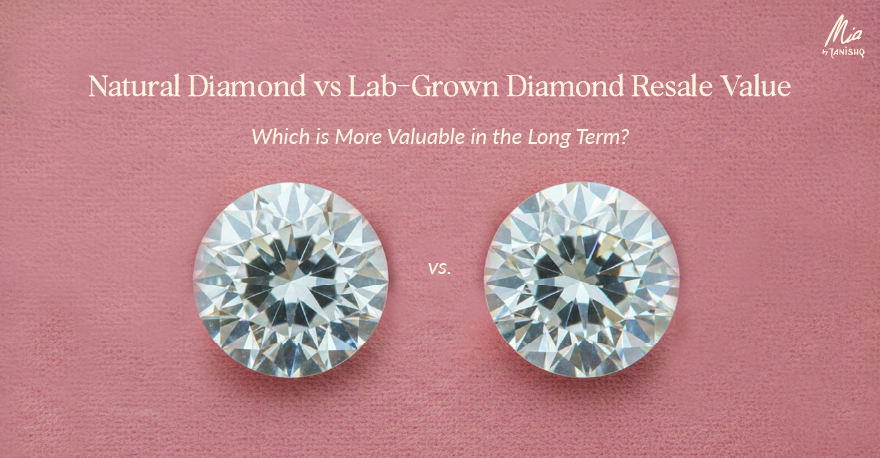

Natural Diamond vs Lab-Grown Diamond Resale Value: Which is More Valuable in the Long Term?
The debate surrounding lab-grown vs natural diamonds is heating up, but one question stays at the forefront: how do their resale values compare? Buyers are questioning whether their investment in lab-grown diamonds will actually hold up over time. Will lab-grown diamonds even follow the same resale curve as natural diamonds, or will they carve out an unreliable path?
Let's dive into the nitty-gritty of natural diamond vs. lab-grown diamond resale value. Uncover the facts behind the sparkle!
What's the Difference in the Resale Value of Lab-Grown Diamonds vs. Natural Diamonds?
The primary difference between lab-grown and natural diamonds lies in their resale value. Natural diamonds typically hold onto their value better, which makes them a more reliable investment. The resale value of man-made diamonds, on the other hand, is a wobbly concept. While these alternatives are more affordable, they don't retain resale value in the long term.
1. Lab-Grown Diamonds
Lab-grown diamonds are typically known to depreciate in value.
Their resale market is still at a developing stage, limiting buyers to an unreliable promise of a future.
They do not hold value as an investment avenue.
2. Natural Diamonds
Natural diamonds are historically known to hold value better, thanks to their rare and one-of-a-kind quality.
They are associated with a much stronger resale market, which brings in more buyers who can shop with peace of mind.
The value of natural diamonds appreciates over time, although factors like quality and market demand are also taken into account.
They are viewed as a store of value in the long term.
Key factors to consider include:
Quality (4Cs: cut, colour, clarity, carat) impacts prices
Relevant market trends and demand have an influence on the resale value
Branding and documentation (including papers & warranty) add to the value long-term
Lab-Grown vs Natural Diamond: Which One is the Smarter Investment?
To finally decide on which one, between lab-grown vs natural diamond, is the better investment for you, you have to consider several factors. Base your decision by taking into account factors beyond natural diamond vs grown diamond resale value.
Here are the differences between lab-grown vs natural diamonds you should know about before choosing your winner:
Why Are Natural Diamonds Preferred over Lab-Grown Diamonds in 2026?
Natural diamonds continue to hold preference in the eyes of lovers, investors and fashionistas alike. The inherent rarity of natural diamonds, their mystical history and stronger long-term value retention make them stand apart.
While lab-grown diamonds are cheaper, the choice ultimately hinges on whether or not a buyer prioritises legacy and high investment quality.
Here’s what makes natural diamonds superior to lab-grown ones:
1. Rare & Unique
Natural diamonds are formed over several years; every gem is truly one-in-a-million, like a life moment worth cherishing.
Though identical in composition, lab-grown diamonds are created in a controlled lab, and the magic of rarity is lost to tech.
2. Sentimental Value
Natural diamonds hold historical significance and emotional value and are passed down through generations.
The rarity and natural origin of natural diamonds make them much more desirable as engagement rings and heirlooms.
3. Potential for Investment Potential
High-quality natural diamonds appreciate in value over time.
The resale value of synthetic diamonds typically depreciates more quickly, like most consumer items.
4. The Resale Market
Natural diamonds are associated with a well-established resale market. They are clear value benchmarks.
Lab-grown diamonds' resale market is in the developing stage and is much less lucrative.
5. Perceived Value & Sophistication
Natural diamonds are associated with sophistication and prestige.
Several buyers perceive synthetic diamonds as ‘disposable’ owing to their position as mass-produced stones.
| Feature | Natural Diamonds | Lab-Grown Diamonds |
|---|---|---|
| Origin | Originating from deep within the Earth, formed over billions of years & brought to the surface by volcanic activity. | Produced within the controlled environment of a laboratory using HPHT (High Pressure, High Temperature) or CVD (Chemical Vapour Deposition) methods in a matter of weeks |
| Composition | Carbon structures containing natural inclusions and trace elements like nitrogen | Same carbon structure; shall have lesser nitrogen impurities or feature distinct patterns of linear growth |
| Look | One-of-a-kind sparkling appearance; impacted by natural inclusions and colour variations, resulting in rarer versions | Visually similar to the natural diamonds; may be clearer due to purity, but the growth patterns are likely to be identified under magnification |
| Cost | Higher owing to their rarity (typically 30-50% more) | Lower (30-50% less) because of controlled production |
| Rarity | Extremely rare and one-in-a-million stature; their value is associated with scarcity, sentiment and age | Mass-produced and not rare; this factor reduces long-term value in comparison to natural diamonds |
| Identification | Requires specialised equipment like microscopes, laser inscriptions, etc., for origin identification | Requires specialised equipment to discern the origin as well |
Final Word
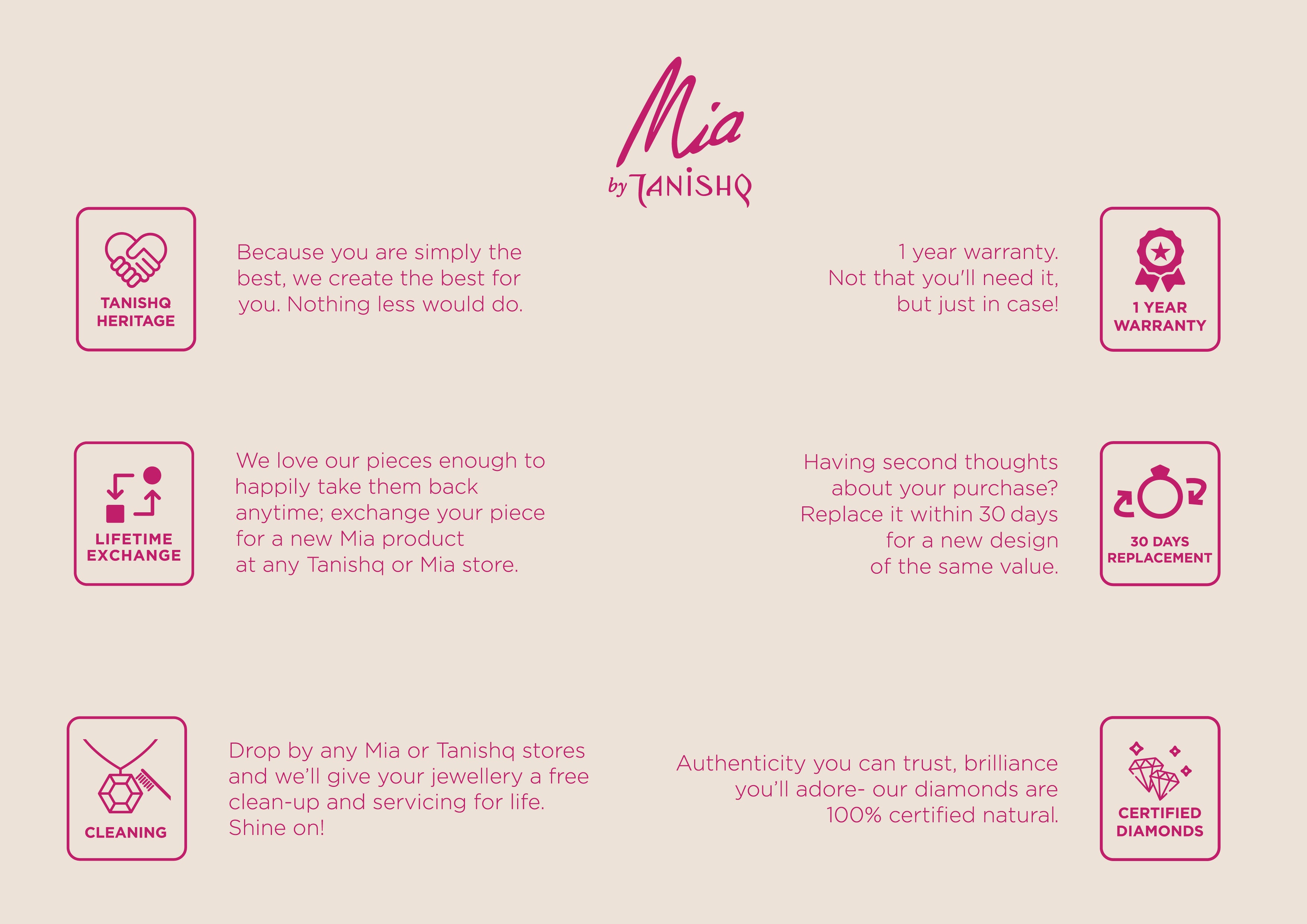
Natural diamonds hold onto their value better, while lab-grown diamond resale value depreciates faster, owing to their manufactured nature. If resale value is a priority for you, natural diamonds are a safer bet. Plus, if you're looking to gift valuable jewellery pieces to a beloved person, natural diamonds are ideal for sentimental gifting moments. They convey much deeper feelings than a mass-produced alternative.
You can explore high-quality gold and natural diamond jewellery online with us, at Mia by Tanishq. We not only promise quality but also budget-friendliness. So, if affordability is also a concern for you, we’ve got plenty of options that will surely catch your attention.
Frequently Asked Questions
1. Which one is better for investment, lab-grown vs natural diamonds?
Natural diamonds are the better investment options owing to their rarity, historical significance and much more reliable resale value.
2. Why do lab-grown diamonds depreciate in value faster?
Lab-grown diamonds are mass-manufactured, so they lack the factors of rarity. Such factors are accounted for in natural diamonds, which are naturally preferred as a result.
3. Where can I buy authentic natural diamond jewellery online?
You can shop for authentic natural diamond jewellery online with us, at Mia by Tanishq. We have a range of innovative and everyday-appropriate diamond jewellery, so you can find your dazzle conveniently from home.
Stories you might also like




×