
Get a Callback
We'll find it for you 💌
Obsessed with this piece? A Mia store expert will call you to help find it nearby.
You're all set!
A Mia store expert will call you shortly to help you find this piece at your nearest store.
Expect a call within 24 hoursDiscover similar or identical jewellery by uploading a picture.
Discover similar or identical jewellery by uploading a picture.
})
The file size should not exceed 5 MB
File size exceeds the limit















































































 Blogs & Articles
- Home
- Blogs & Articles
- discover-how-natural-diamonds-are-formed
9 Mar 2026

by Mia
9 Mar 2026
Read:
null
Spread the Fashion Love!


Be the first to see
Explore Mia’s latest jewellery collection, crafted to feel precious, every day!
The catalogue has been sent to you via email!
Be the first to see
Explore Mia’s latest jewellery collection, crafted to feel precious, every day!
The catalogue has been sent to you via email!
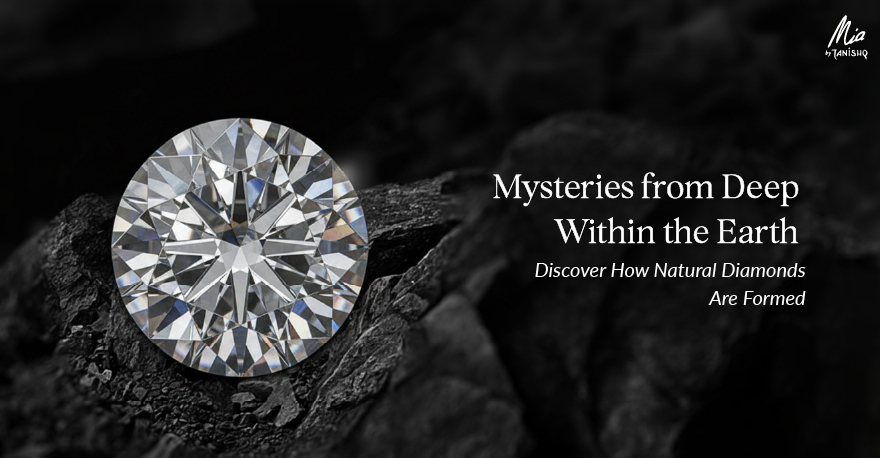

Mysteries from Deep Within the Earth: Discover How Natural Diamonds Are Formed
Have you ever wondered how a diamond, which symbolises love and luxury, begins its journey? Far from the sparkle of jewellery stores, its story starts deep within the Earth. Intense heat and pressure within the Earth’s crust slowly craft one of nature’s most desired treasures.
This fascinating process has intrigued scientists for years, and in this blog, we explore how natural diamonds are formed.
Science Behind the Phenomenon: How Are Diamonds Made Naturally?
Every gem is a rare marvel that has been shaped by a unique combination of the naturally triggered geological forces. For instance, natural diamonds are formed from pure carbon deep within the Earth's mantle, about 140 - 190 km below. Exposed to extreme heat, around 900-1300°C, and immense pressure, carbon atoms crystallise into a dense lattice structure.
These natural occurrences span over billions of years. After that, the newly formed diamonds are brought rapidly to the surface by violent volcanic eruptions through the kimberlite pipes.
Volcanic activity is necessary to bring the diamonds to the surface. In fact, only a fraction of the formed gems survive the journey, making every diamond exceptionally rare and valuable.
Here’s the breakdown of the diamond formation process:
1. Carbon Source:
Carbon deposits that are often 'ancient' become the foundational base for the formation of diamonds.
2. Crystallisation Stage:
Deep within the Earth’s mantle, intense heat and pressure (around 45,000x the atmospheric pressure) force the carbon atoms to bond into the diamond's cubic crystal structure. It makes the most stable form of carbon under those conditions.
3. Volcanic Ascent:
Around 100 million years ago or possibly even before that, the deep-seated volcanic eruptions rapidly transported the diamonds through magma. This magma quickly rose from the mantle up to the surface, whisking the diamonds as accidental guests. It prevented them from reverting to graphite.
4. Point of Deposition:
The magma, which is also known as kimberlite or lamproite, brings the diamonds to the earth's accessible surface. It deposited them in pipe-like structures.
How Diamonds are Formed Naturally: What Triggers their Formation?
Formation of diamonds is not just a random occurrence; it's linked to diamond growth and large-scale geological processes.
Large-Scale Geological Happenings
It is now known to scientists that diamond growth is actually connected to tectonic plate movement and subduction.
Subduction Triggers the Diamond Formation Process
The Earth's surface is divided into tectonic plates. When any of these plates bend and sink into the mantle (subduction), they provide the ingredients necessary to trigger diamond growth.
So, the sinking plates provide the necessary ingredients for diamond formation, even at steep depths over 660 km (top boundary of the lower mantle).
Diamonds Contain the Subducted Ingredients
Certain diamonds (Type llb) contain boron, water and other elements which come from deeply sunken tectonic plates.
How Do Diamonds Look Naturally When They’re Newly Formed?
Certain diamonds display signs of resorption, featuring softened edges or even etched surfaces. These are representative of the extreme conditions they've conquered. Such traits offer valuable insights into the remarkable journey of these glistening gems that come from deep within the Earth.
Natural Diamonds Appear Unassuming Upon Formation:
Prior to the cutting process, these diamonds feature a glassy lustre and sometimes even a hint of colour.
Crystal Formation:
The rough diamonds typically take form as crystals. They are shaped by the carbon atoms’ atomic structure in a cubic lattice.
Here are the crystal shapes which commonly result:
Octahedron (two pyramids which are joined at the base)
Cubes
Dodecahedra (12-sided shapes featuring curved faces)
Irregular shapes (as per differing growth conditions)
Final Word
Natural diamonds are formed through a complex natural process, which contributes to their rare stature. It involves intense heat, pressure and geological activity taking place within the Earth's mantle.
JOver several years, carbon atoms bond and crystallise, and volcanic eruptions bring the precious gems to the surface. Each diamond is truly a unique testament to the Earth's incredible geological forces, making every stone truly extraordinary and valuable.
Now that you know how natural diamonds are formed, you must be all the more drawn to their timeless sparkle.
Discover a wide range of stunning diamond jewellery with us, at Mia by Tanishq. Adorn the tangible mystical power in glistening form, borne by the gems across billions of years, so they could complement your sparkle today!
Frequently Asked Questions
1. Are natural diamonds considered to be rare?
Yes, natural diamonds are considered to be rare due to how they are formed only under specific conditions, each unique in characteristics and sparkling intensity.
2. How long does it take for the diamonds to be formed?
Diamonds take up to billions of years to form, generally between 1 and 3 billion years.
3. Where are the diamonds found?
Diamonds are found in the kimberlite pipes, alluvial deposits and near other volcanic rock sites.
Stories you might also like






×